
The High Stakes of Material Selection
One small shift in alloying elements can be the difference between an industrial application that runs for years and one that fails prematurely. When you’re selecting the best suited metal alloy for your application, you’re not just going for the strongest material. The decision is far more nuanced than that. The selection should guarantee component longevity, performance, and safety under specific environmental conditions. The wrong choice not only costs you financially, but it can also compromise your safety, uptime, and customer trust.
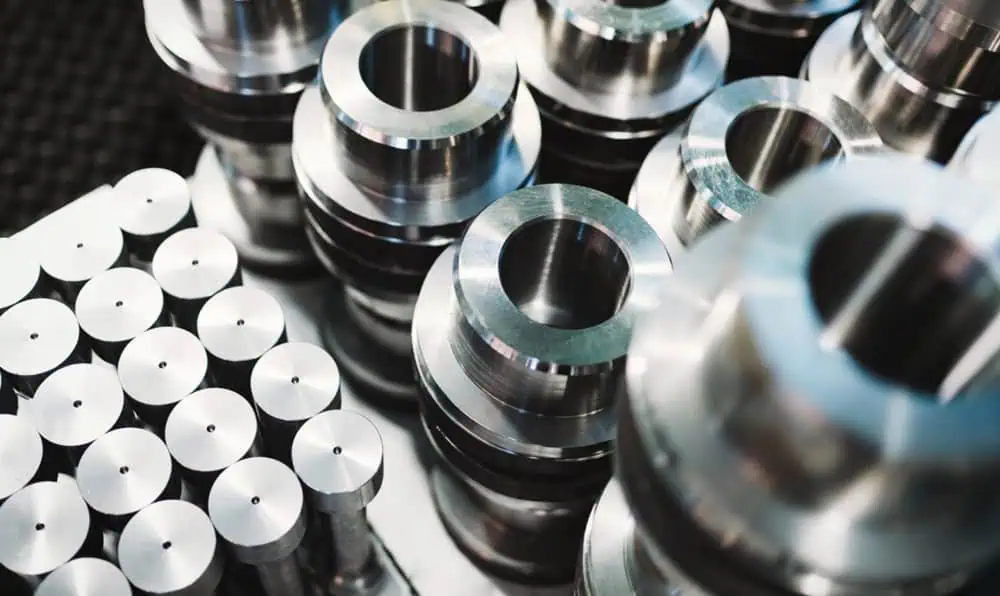
Back to Basics: What Is a Metal Alloy?
What Are Metal Alloys?
Metal alloys are created by mixing a metal with other metals or non-metallic elements to enhance properties like durability, corrosion resistance, and strength. They’re formed by melting the components together, combining the best attributes of each to outperform pure metals.
What Metals Are Alloys?
The most common alloys include:
- Steel
- Stainless steel
- Nickel alloys
- Aluminum alloys
- Brass
- Bronze
- Tool steels
- Titanium Alloys
Pure Metals vs. Alloys
Engineers use alloying to design materials with custom properties like enhanced strength, corrosion resistance, or particular melting points that you can’t get from pure natural metals. The atomic lattice of a base metal is intentionally disrupted with other elements to enhance the material’s performance.
The “Big Three” Performance Metrics
Strength and Hardness
Strength here has two separate meanings.
- Yield strength. The maximum stress a material can withstand before transitioning from elastic to permanent plastic.
- Tensile strength. The maximum stress a material can withstand before breaking.
Alloying elements influence both. When carbon is used in steel, it increases the rigidity and strength. Other elements can be used to increase longevity, improve fatigue strength, or enhance toughness for impact-heavy applications.
Corrosion Resistance
Chromium and nickel help prevent chemical and rust damage by forming a strong protective layer on the surface and boosting the internal strength of the metal.
When selecting materials for harsh environments, such as chemical, marine, or oil and gas environments, it’s important to balance corrosion resistance, cost, and strength. Since such environments involve highly corrosive agents (such as acid and seawater), high pressure, and high temperatures, the goal becomes preventing material failure. Materials are selected based on their Pitting Resistance Equivalent Number (PREN), with values greater than 40 preferred for the most challenging environments.
Temperature Tolerance
At elevated temperatures, materials can slowly deform under load or “creep.” Creep resistance is a material’s ability to prevent this under mechanical stress at higher temperatures. This is important for ensuring turbine blades or engine parts keep their structural integrity and prevent time-dependent strain over a long period of time.
To achieve oxidation resistance, heat-resistant alloys are usually alloyed with Chromium/Aluminum. Refractory metals, on the other hand, are usually pure elements like Molybdenum, Niobium, Rhenium, Tantalum, or Tungsten.
Secondary Factors That Impact Your Bottom Line
Machinability and Weldability
Machinability is how easily a metal can be cut (e.g., turning, milling) with minimal tool wear, less power usage, and a quality surface finish. Weldability is a material’s capacity to be welded into reliable structures under certain fabrication conditions. In choosing materials for manufacturing, this must be considered to avoid delays, higher costs, and production delays.
Weight-to-Strength Ratio
Specific strength, or the weight-to-strength ratio, is a metric used in aerospace and high-performance automotive applications as it defines what load a component can handle relative to its total weight. If the ratio is higher, engineers can design lighter structures that are more fuel-efficient and higher-performing without sacrificing structural integrity or safety.
Cost vs. Longevity
Going with the cheapest material available can cost a lot more later on. The total cost of ownership involves paying for long-term reliability, service life, and durability in an effort to avoid inefficiency, extra repairs, and early replacement.
Common Industrial Alloys & Their Best Use Cases
The most common industrial alloys include:
- Stainless steel. Corrosion resistance (architecture, food processing, and medical equipment).
- Superalloys (Inconel). Extreme heat tolerance (jet engines and gas turbines).
- Titanium alloys. Strength-to-weight ratio (aerospace and chemical processing).
- Tool steels. Hardness and wear resistance (cutting tools, dies, and injection molds).
Why Engineering Support is Non-Negotiable
The tiniest changes in an alloy’s chemistry, even fractions of a percent, can alter its internal structure and behavior.
Ferralloy is a technical partner that can help you select the right alloy through material testing and validation. We can guide you through industry standards such as ASTM, ASME, and AISI, and recommend options that align with how you’ll actually make the part.
Making the Right Choice the First Time
Selecting an alloy is a critical engineering decision requiring a balanced approach to three primary pillars: chemistry, environment, and manufacturing capability. It’s a process that involves weighing the internal atomic structure against external stressors while guaranteeing the material can be produced efficiently.
Don’t leave material selection to chance. If you’re weighing alloy options, dealing with a harsh environment, or trying to extend and improve the life of your component, Ferralloy’s engineering support can get you the right answer faster and with far less risk. Ready to talk through your application? Contact us today or request a quote, and let’s get started.